
Gothic narrative, The Little Stranger (2009), is the third novel by much-loved feminist author, Sarah Waters, to be shortlisted for the Man Booker Prize, and preserves the author’s status as a veritable storytelling sorceress. Set in and around the fictive deteriorating manor house of Hundreds Hall in the county of Warwickshire, and narrated through the restrained first person voice of Faraday, a lower-middle-class countryman, Waters continues to treat us to the historically rich descriptions of her former Victorian-style novels, such as her debut Tipping the Velvet (1998) and a favourite in higher education Affinity (1999). However, The Little Stranger by contrast is imbued with a palpably potent chill. One reader posted on the message board of an online book club that the novel had made them ‘fear themselves’ and Suzie Fey of the Literary Review wrote that ‘a fox screamed outside my window, and I nearly had a heart attack.’
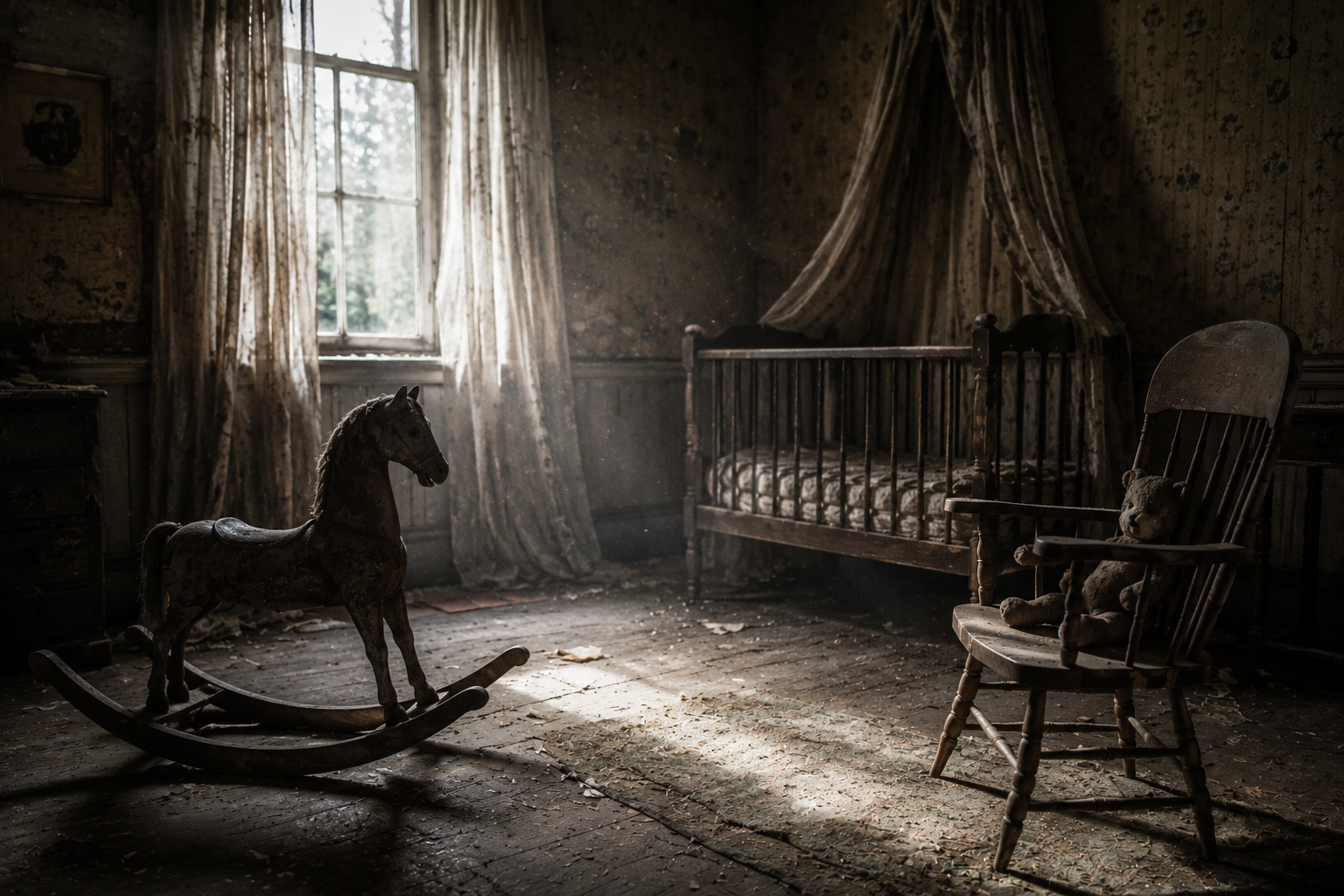
Indeed, the novel skilfully balances the metaphorical darkness between individual and external worlds with the clouds gathering when Faraday, a local doctor by profession, is called to tend to the cagey Roderick Ayres who together with his similarly poised sister, Caroline, and mother, Ruth, come to represent the disturbing impenetrability of the British upper class. As Faraday tries to grow close as he can to them without violating the social boundaries that are made subtly yet certainly clear to him yet more sinister events occur. There are, among other enigmas, ghostly etchings that appear in a former nursery – ‘a truly frightening scene’ as critic Fey additionally remarks – inanimate objects that move of their own accord across furniture, sudden fires, and finally psychotic dreams that are followed by frantic, secluded death.
It seems the mild-mannered Faraday is being tested. Coupled with what he begins to feel is an intense love for Caroline, the daughter of the family, Ayres, the doctor’s rational mind is pushed to its furthest limit. “I can see how the house, and the farm, in the state they’re in now, could make you feel gloomy”, he diplomatically attempts to justify for the sake of his frightened love interest who panics in the face of the escalating tragedy. However, similarly to the great works of writers in this literary tradition such as Edgar Allan Poe, it becomes clear that the physical surroundings to which Faraday refers are indissolubly connected to the spiritual condition of those who live within: an even more urgent, and eventually shocking, revelation since they have been so desperately evading the mighty nature of the overarching grim truth.
The context of Sarah Waters’ novel is 1940s post-war Britain wherein the fairer treatment of working-class men who’d fought directly alongside their wealthier counterparts could no longer be denied – ominously in the background, the elite Ayres drop one by one within the immediate story, as if flies, as the agitated zeitgeist of a broader oppressed society materialises as the confrontational phantom. Just as haunting is the emotionally exposed portrait of a lone and loitering Faraday that remains in your consciousness, long after the book has been put down. In one part of the novel, the doctor walks around the derelict Hundreds Hall with an unsettling accepting ease: it becomes clear for us – as the familiarly involved reader – that the systematic horror we have witnessed signals his untameably angry subconscious that thirsts for the privilege that has been withheld. There is further suggestion that the intense emotion becomes such a great repulsion that it manifests as an entirely separate physical entity that drives the havoc in the house. The book depicts the relationship between the desire for power and human fragility as well as the blurred line between the damage of internalised social inequality and the individual’s right to be truly and completely seen.
Indeed, the last few chapters show Faraday hotly pressuring Caroline to marry him, and trying to convince her, in the face of all the catastrophe, to keep the destructive gaping house. Intertwined are the themes of class politics, psychic repression and obsession. Another reader on the aforementioned forum commented: ‘I’ll be thinking twice in the future before holding a grudge!’ The Little Stranger not only stands as a testament to Waters’ masterful writing, but also the relevance of the Gothic genre through the rippling annals of time.