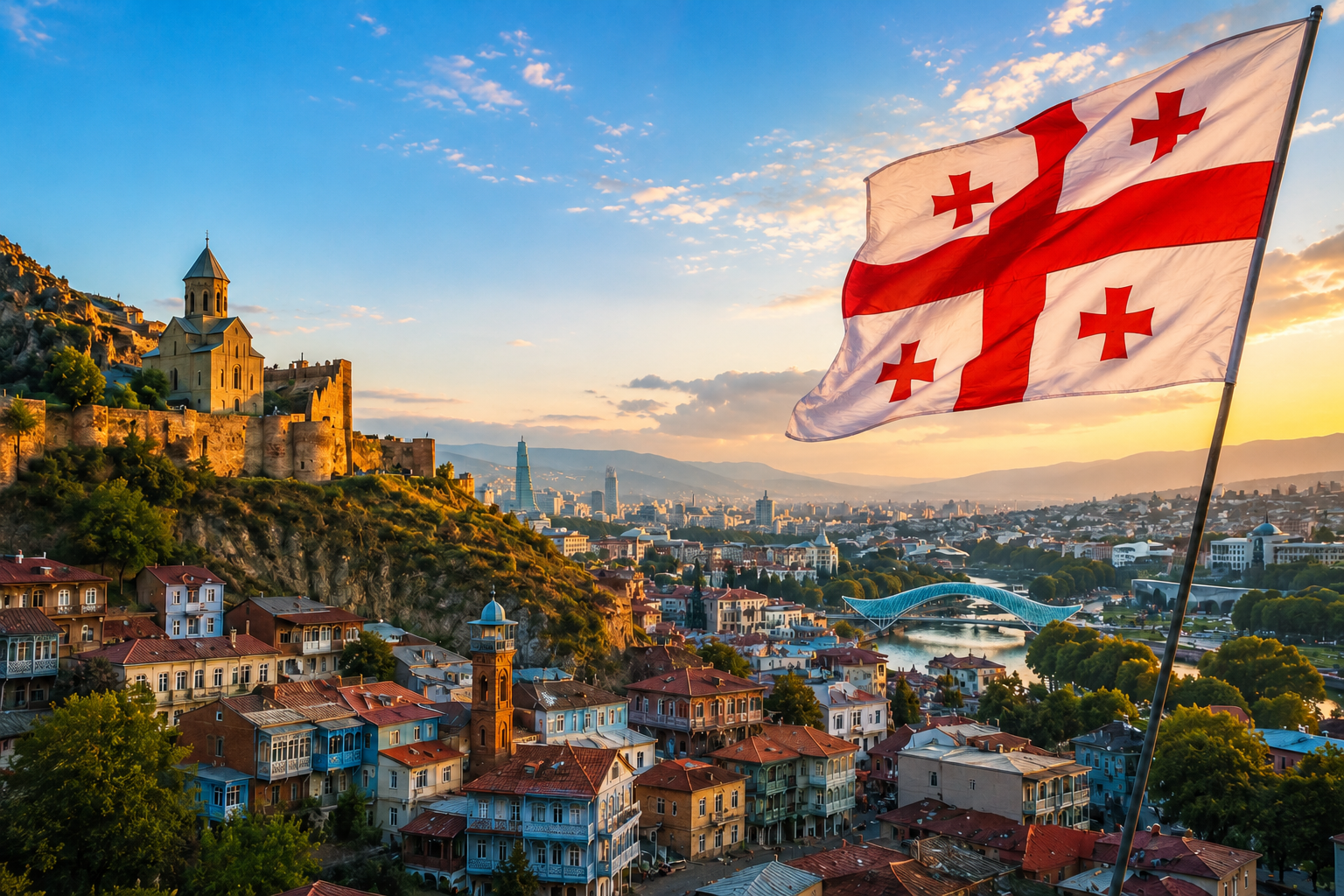
Georgia is part of the rolling Caucasus region which is also constituted of Azerbaijan and Armenia. As well as sharing a geographical border with the latter countries, the land is connected to Russia, Turkey and the Black Sea. It is not the usual focal point of travel and leisure, or the major geopolitical landscape, but the culture has a charismatically cool character that should not be overlooked. The evening was warm and welcoming when we recently flew into Tbilisi: Georgia’s proudly rustic yet vibrant capital city. The area is scattered with curving cobblestone streets and enthralling architecture that display an original cosmopolitan history where the people are especially friendly. The National Geographic notes ‘Hospitality’ as a key tradition where there is a Georgian proverb that states: ‘Every guest is a gift from God.’ Indeed, a young couple offered to help us navigate a meal, as we curiously explored our options for dinner at a local eatery in the area of Median Square, near our place, where the main River MtKavari flowed alongside: we were given a hearty introduction to Khachapuri, a type of rich cheesy bread, and stuffed dumplings filled with soup which should be classically held at the base and sipped first, lest the contents go spewing, or worse, catastrophically to waste. These are treated as a favourite go-to comfort food.
To accompany your meal, if desired, wine in Georgia is considered second-to-none as it is where the classy alcoholic beverage originates with a history reaching back around 8,000 years – now, of course, popular in great variety across the world. When we visited the country, we tried several indigenous wines such as Saperavi red & RkatSiteli white at a small, intimate winery named Kerovani. This was a family-owned business, which is common in the country, situated in the small town of Signaghi: itself part of the wider thriving winemaking region of Khaketi. A vast majestic countryside encompasses Tiblisi. Turkish coffee can also be found everywhere as the country sits at the international crossing between Eastern Europe and Asia and was a significant trading stop on the famed olden-day Silk Road where the Caucasus Mountains meet the Black Sea. This is an ideal location for the exchange of goods and cross-cultural ideas as it forms a natural bridge. Indeed, the morals of peace, community and consolidation are inherent to modern-day Georgia at the grassroots. Interestingly, the nation gained its independence quite recently in 1993 during the ‘Rose Revolution’: a non-violent exchange of power which followed a series of passionate vocal protests by the political opposition.
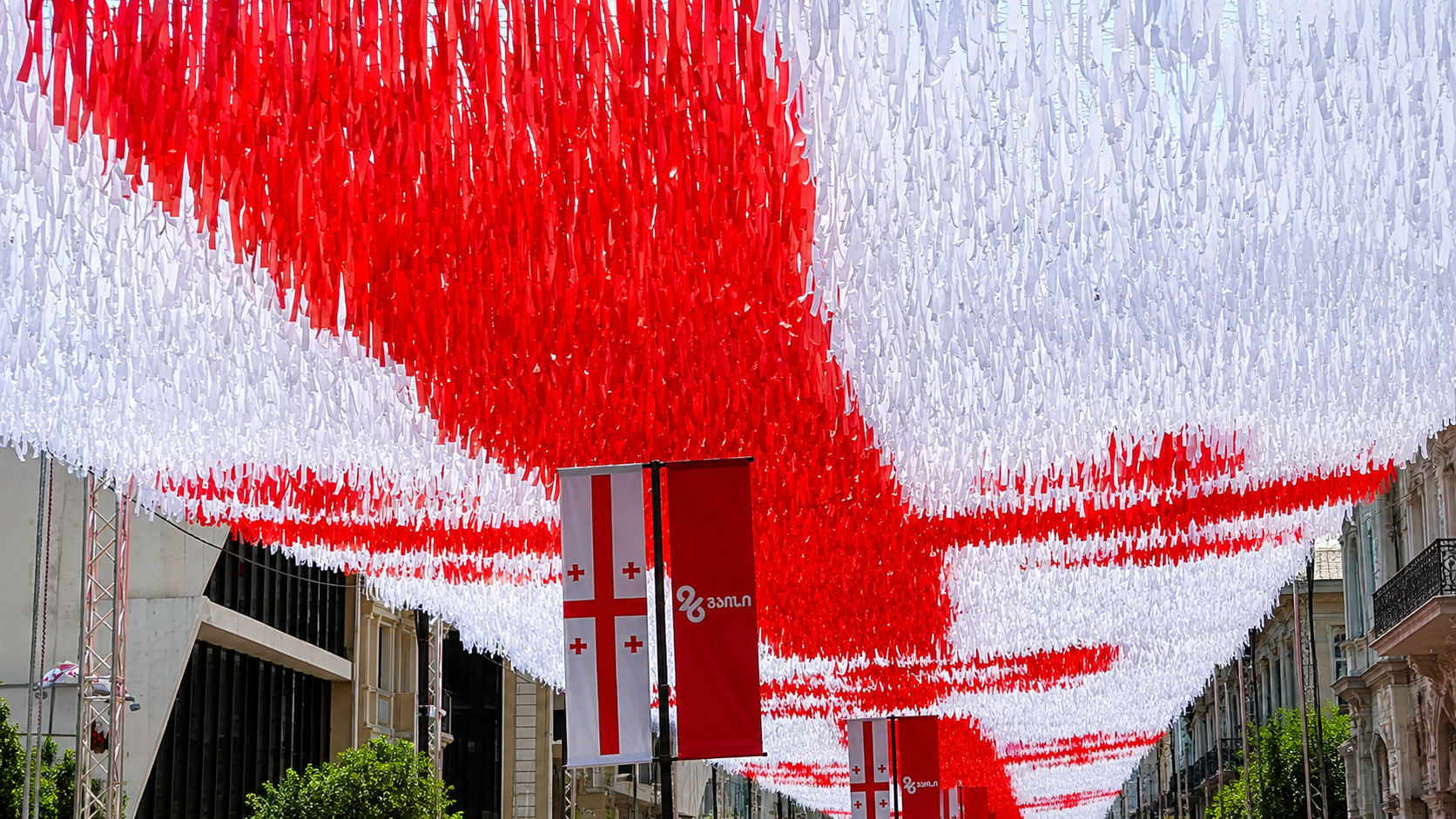
The country celebrates Independence Day on the 26th of May which salutes the early establishment of the First Democratic Republic of Georgia in 1918: it is a festive event which, this year, included a large flag constituted of white waving confetti that formed a canopy as well as beautiful silken seating which evoked a mood of togetherness and merriment (pictured). However, much military also rolled into Liberty Square where the commemoration took place as well as throughout the region, which served as a sobering reminder of the conflicting political powers that battle behind the scenes even as strong Georgian culture permeates. Martial presence was largely present to honour the country’s international defence, but this nods to the stance of fortified protection that the nation has had to adopt. Indeed, nearby, the work of national contemporary artist, Tato Akhalkatsishvili, is displayed in the Georgian Museum of Fine Arts where his surreal pieces often explore the underlying tension between a growing autonomous identity and the heavy imperial past with which it is inextricably linked. One painting, BORN IN… (2013), for example, depicts children in toy-like cars trying to navigate within a narrow concrete confine as a crossed-out portrait of Stalin looms in the background. This symbolically relays the country’s backdrop of repeated international conquest by the Soviet Union, Persians and the Ottoman Empire.
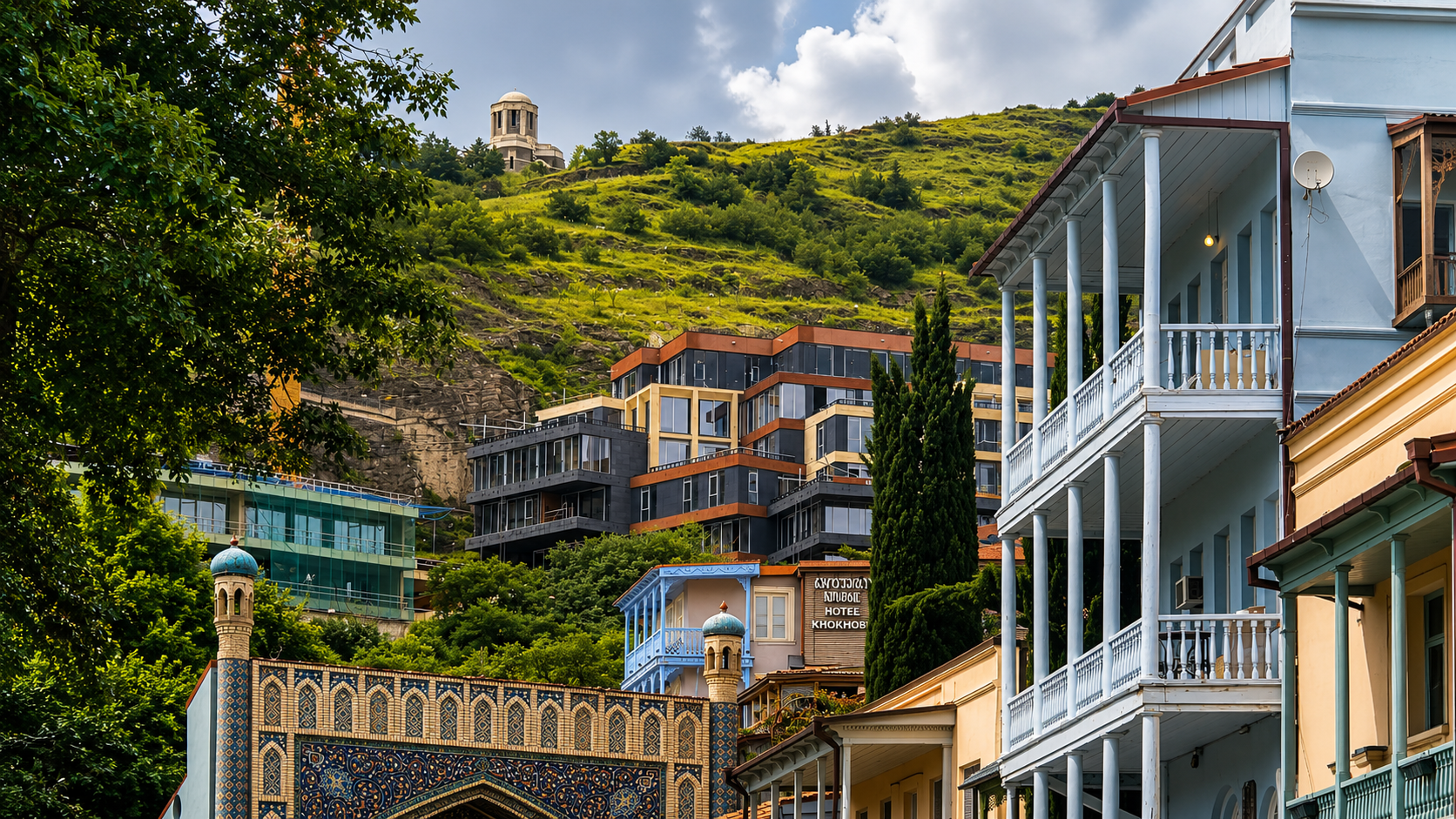
Yet, a colourful dimension of cosmopolitanism provides a counterbalance. The blend of Turkic and traditional Eastern European buildings stream through the main city and appear as if a tangible fairytale while the mood is generally relaxed. There are many bohemian streets in the district of Kala, the centre of Tiblisi’s Old Town, and the hot Sulphur baths are notably open 24/7 when one can have some gentle downtime as they enjoy a soak. These thermal springs are housed in spas which appear as eye-catching domes that rise and dot the city. Night life includes an active techno and electronic dance scene with the club, Bassiani, leading the beat-laden way. One can also find stirring Georgian folk music and jazz. Through an ancient atmosphere, the country has a magnetically modern pulse.