‘Artists respond to themes spanning ecology, identity, spirituality, politics and imagined worlds’
There is a hypnotic hidden dimension to the variety of works displayed at the Drawing Room’s Biennial, this year. The show ‘returns with more than 250 newly commissioned drawings featuring leading international artists.’ The well-curated exhibit is a collective kaleidoscope of prominent contemporary artists as one may have never seen them: in their simplest yet bold distilled signature form. One piece named Nervous Systems – rendered in precise grey geometry – is by Charlotte Edey whose larger works typically depict expansive feminine dreamscapes. You may spot giant floating pearls and winding staircases that are frequent features of her surrealistic realms. The exhibit then highlights the unique technical curvature that underlies her artwork, and in the context of the creator’s background of design too. Elsewhere, a drawing by Hardeep Pandhal, an abstract artist, depicts A Dragon Walking donning an unusually distinct pride as if it just broke free from one of the post-colonial quagmires that usually haunt the characters of the creator’s hallucinogenic world. Other artistic styles in the show are instantly recognisable such as Rose Wylie’s subversively etched, Girl in Tights, or Matthew Krishanu’s misty photographic paintings of fraternal ties and a nostalgic childhood, growing up in Bangladesh. The artworks are generally playful, beautiful and candid. It is as if they have been lifted straight out of the pages of the accomplished artists’ sketchbooks and put onto the gallery’s walls.
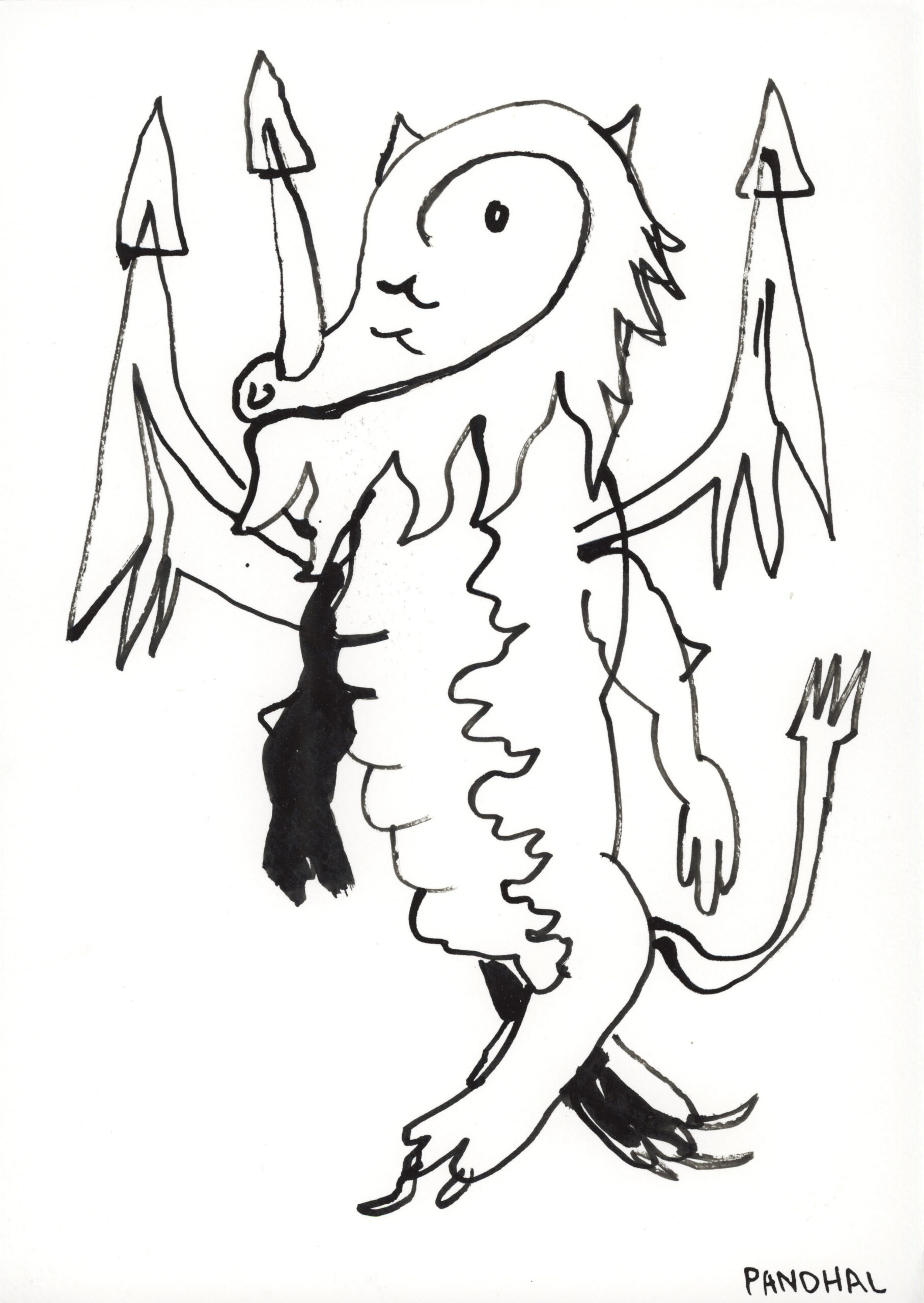
A Dragon Walking by Hardeep Pandhal
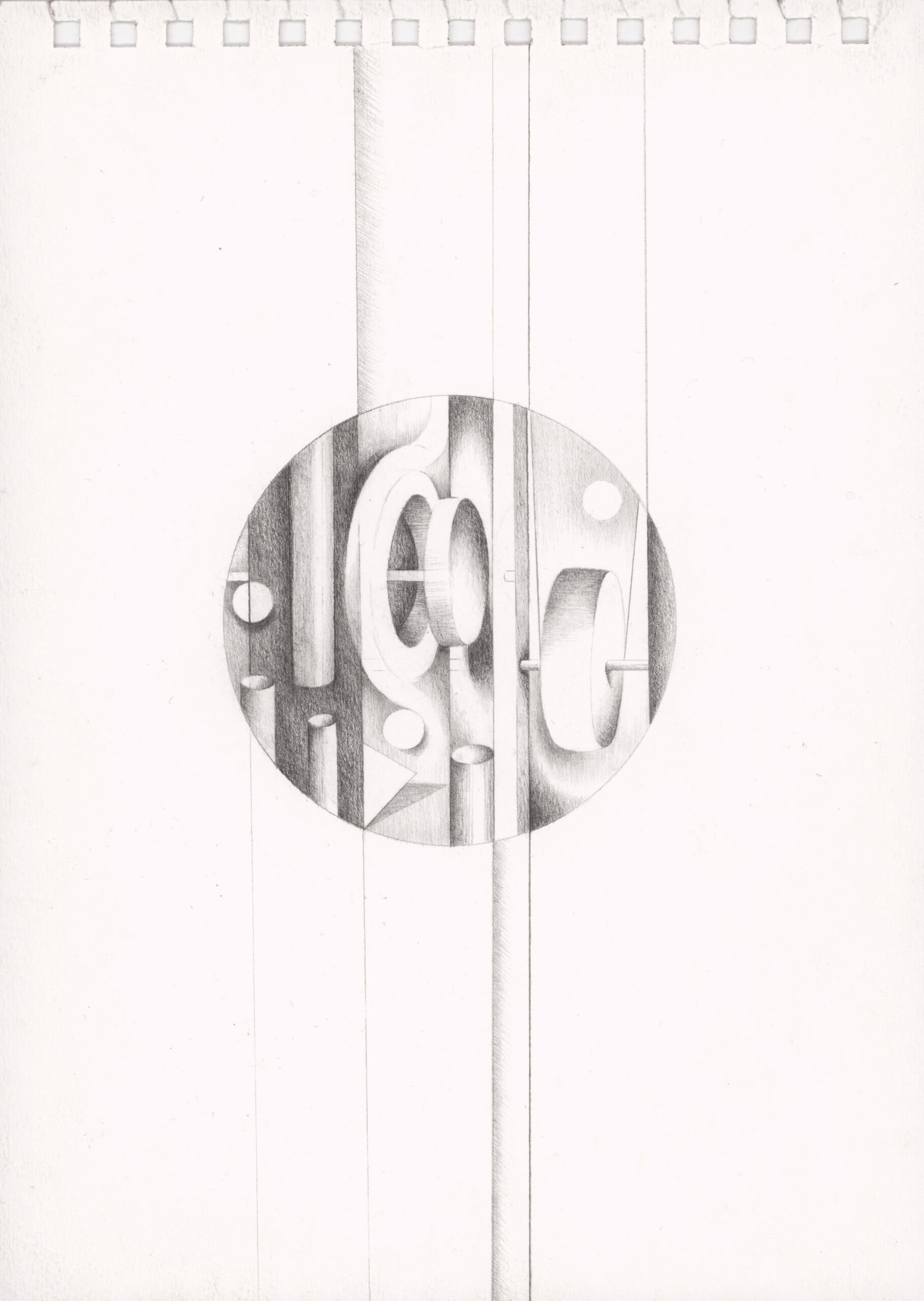
Nervous Systems by Charlotte Edey
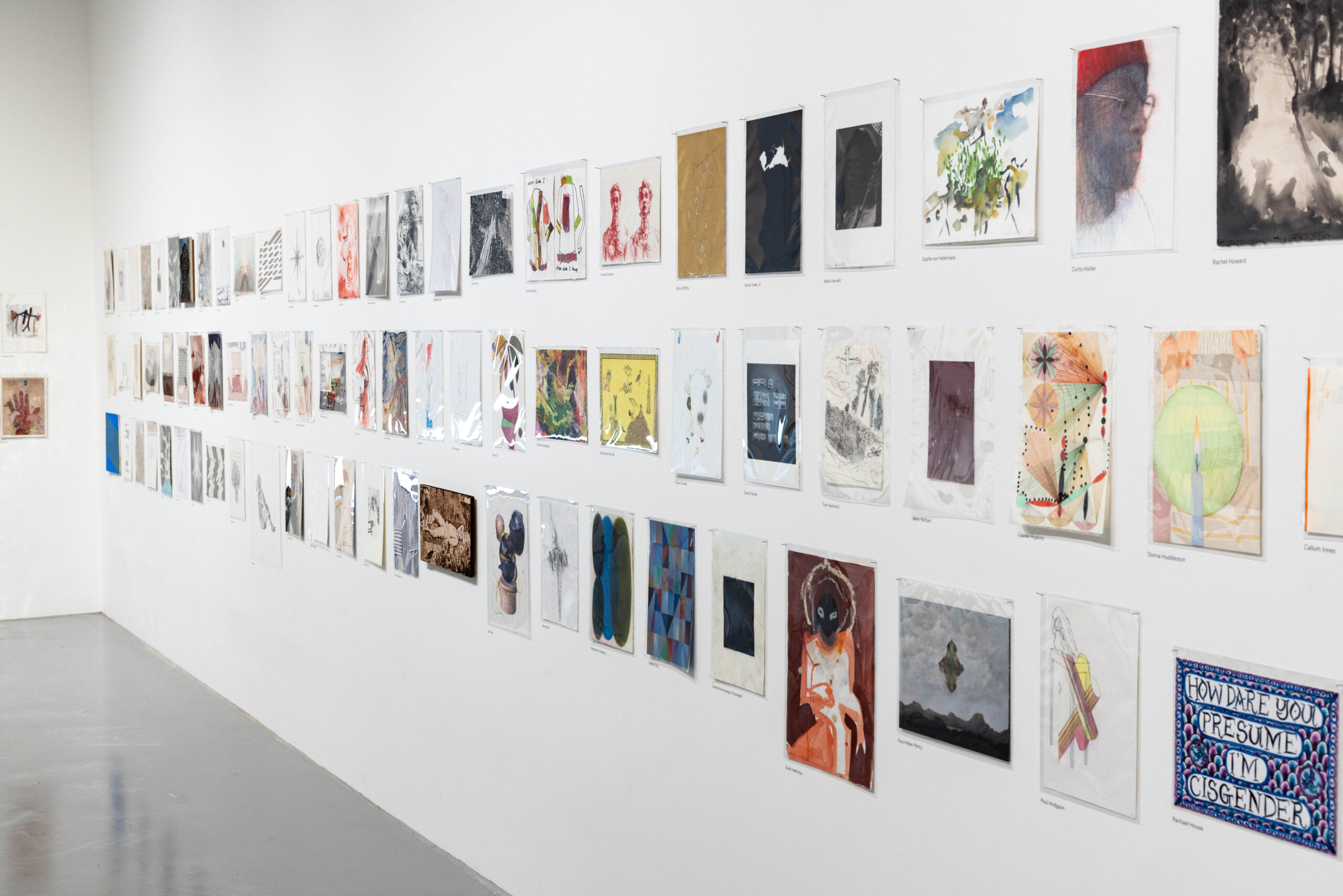
Drawing Room Biennial 2026
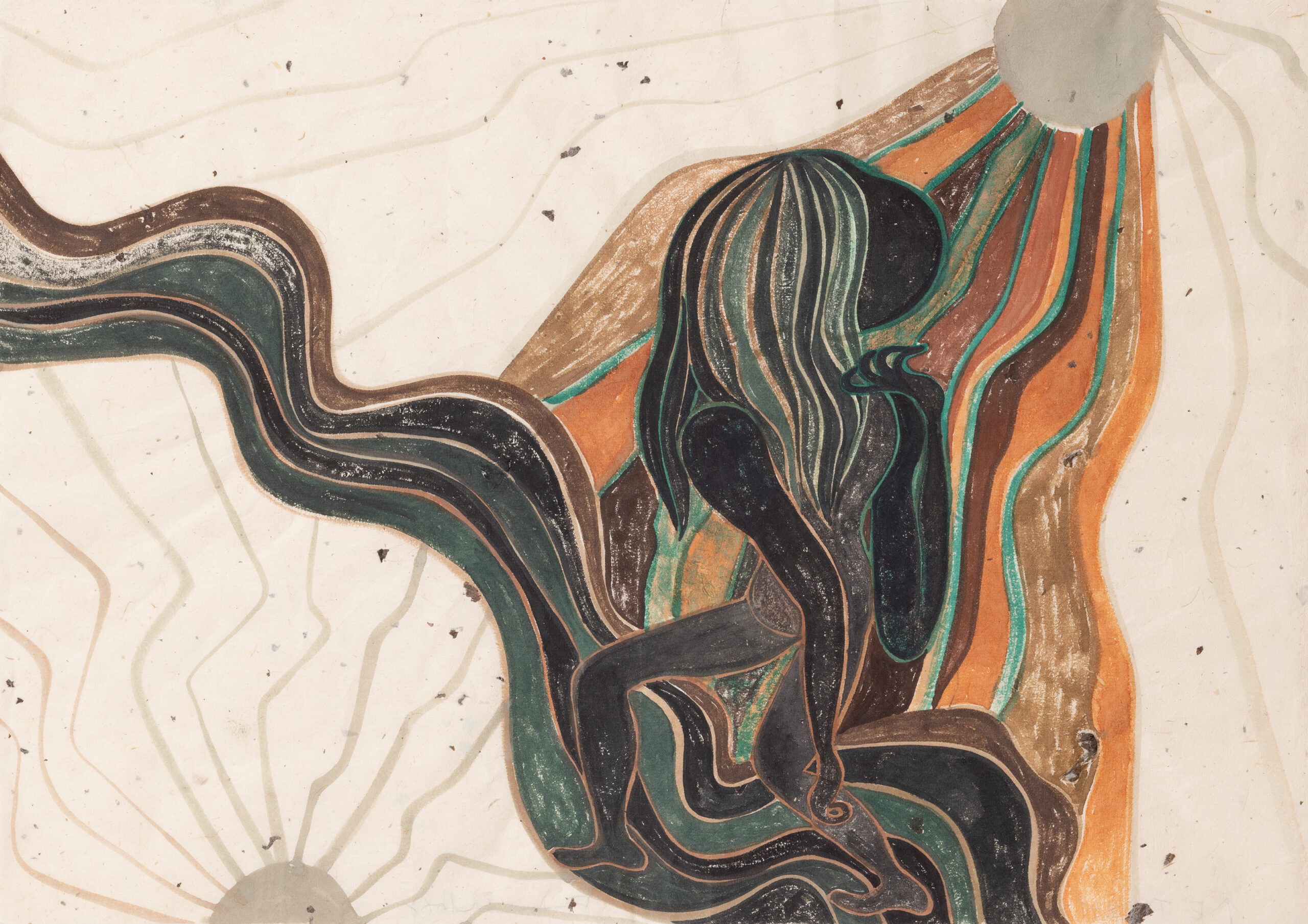
Magnetic Field by Emma Talbot
Indeed, this is not far from the reality. The Drawing Room, which is a Bermondsey-based gallery, ‘invited each artist to produce a new drawing on A4 paper, using any medium’ where the ‘participants respond to themes spanning ecology, identity, spirituality, politics and imagined worlds.’ This is experienced through the explosion of visual energy in the shifting shape, colour and form. In the piece, Magnetic Field, Emma Talbot’s mythical sinewy figure seems to call to you even as her back is turned, towards the end of the exhibit, and it has hard to forget Joel Wyllie’s eerie elongated portrait which could be seen as a reflection on internal alienation or discord. Tania Kovats’ Snow Moon is unapologetically ethereal saluting the sensory celestial while Mary Stephenson’s, Deep Bed, has an alluring quantum cosmic quality. The gallery has stated that ‘The Drawing Biennial brings together artists working at the forefront of contemporary practice, reaffirming drawing as a vital and enduring discipline,’ and furthermore, one could say, an inspiring one. There is approachability in the particularly personal presentation of artists where the mode of illustration not only provides a close-up of the structural framework of larger expression but also sparks a connection to creativity within the viewer themselves. Indeed, it is easy to pick up a pencil, pen or I-pad, nowadays, to try your hand. The gallery also states: ‘Its mission is to champion drawing and the potential to help understand ourselves, each other, and the world’.
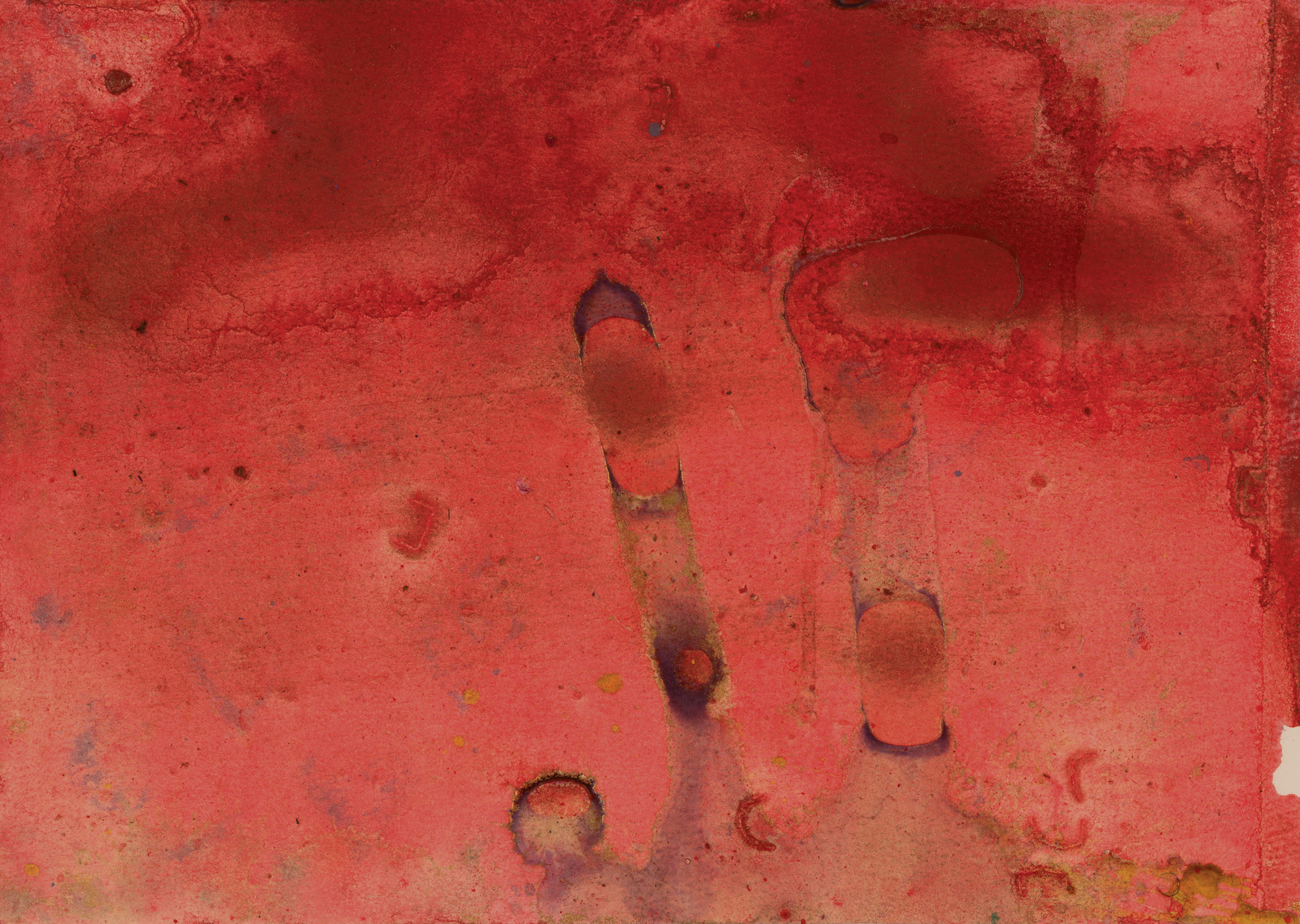
Frank Bowling, ‘Red Spine’, 2025.
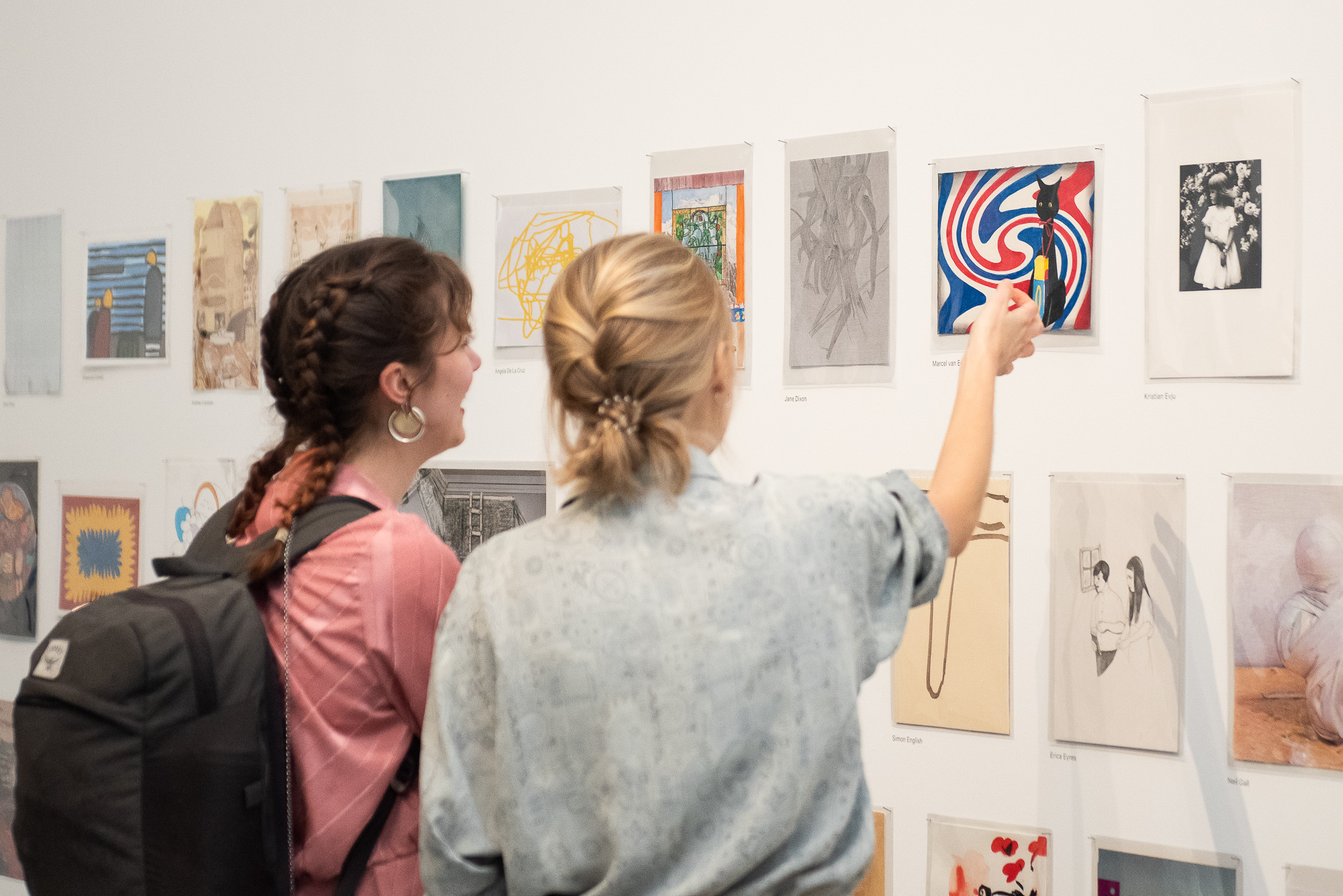
There is a whole second room – an extension of the Biennial – dedicated to this principle. It is possible to contribute your own illustrations while viewing the many vibrant works of other talented visitors. The gallery regularly utilises its big white walls to deeply immerse the observer in the concept. This time, the space acts to collapse the perceived divide between celebrity and anonymity to emphasise artistry as a universal resource available to us all. It allows the representation of colour that lies within. As opposed to feeling intimidated within a grand or ostentatious setting, we are introduced to open process-based practice and the people who are behind it. Artists who have donated drawings to the Drawing Biennial 2026 also include Frank Bowling, Nicholas Byrne, Shiraz Bayjoo, Victoria Cantons, Lubna Chowdhary, Eileen Cooper, Michael Craig-Martin, Richard Deacon, Mona Hatoum, Donna Huddleston, Gary Hume, Chantal Joffe, Jasleen Kaur, William Kentridge, Ragnar Kjartansson, Matthew Krishanu, Michael Landy, Liza Lou, Goshka Macuga, France-Lise McGurn, Lindsey Mendick, Haroon Mirza, Francesca Mollett, Mali Morris, Paul Noble, David Noonan, Isabel Nolan, Jockum Nordström, Precious Opara, Julian Opie, Lydia Pettit, Paloma Proudfoot, Richard Mark Rawlins, Ro Robertson, Tai Shani, George Shaw, Mike Silva, Michael Simpson, Sin Wai Kin, Luc Tuymans, Nicola Tyson, Caroline Walker, Alison Wilding, and Georg Wilson.
The Drawing Biennial is a free exhibition which runs from 16 April – 23 June. The show culminates in a two-week online auction fundraiser, with bidding starting at £400 where it is possible to buy some of the incredible pieces. This closes on the 23rd June at 9pm. The Drawing Room was founded by curators Mary Doyle, Kate Macfarlane, and Katharine Stout in 2002 and is part of Tannery Arts CIO: a visual arts charity that also provides affordable artist studios. The works have been selected by a committee of Drawing Room’s Co-founders and Directors alongside invited curators and collectors.